Barbara K. Prokop
Product Designer

CSSA01
CSSA01


CASE STUDY 01

Studio Systems Audit

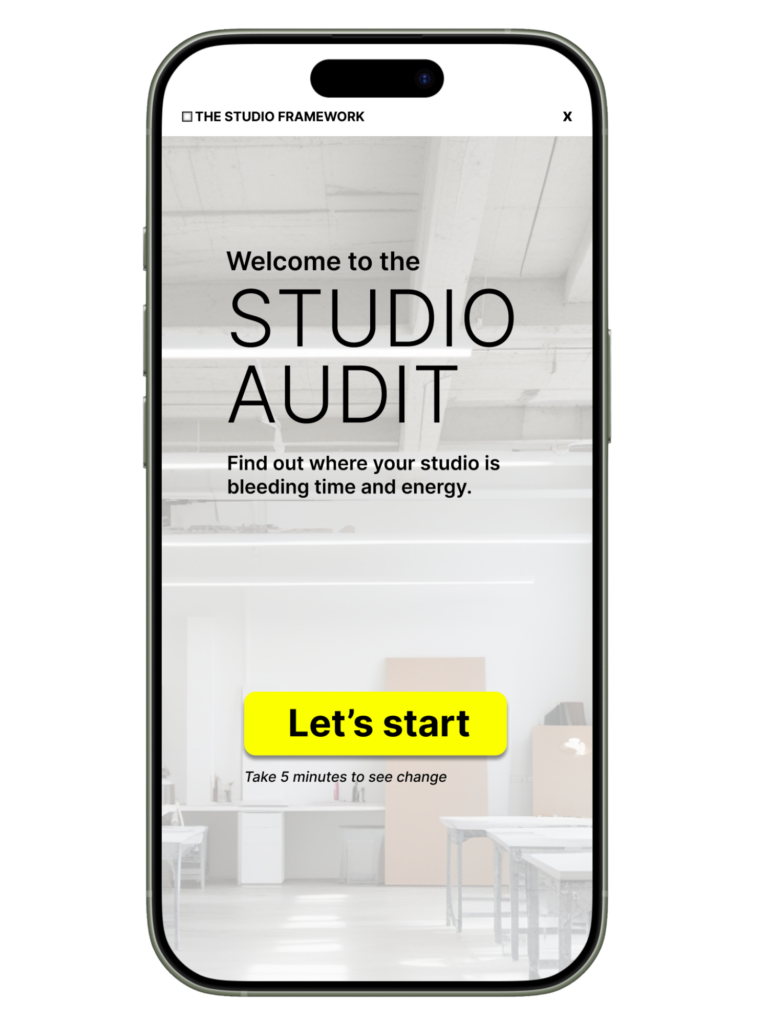
A mobile diagnostic tool that helps professional artists identify exactly where their studio is bleeding time and energy, before they book a consultation.

This prototype demonstrates how 5 questions and an AI photo analysis can help clients discover what needs fixing in their process before an initial conversation happens.



CASE STUDY 01

Studio Systems Audit

A mobile diagnostic tool that helps professional artists identify exactly where their studio is bleeding time and energy, before they book a consultation.

This prototype demonstrates how 5 questions and an AI photo analysis can help clients discover what needs fixing in their process before an initial conversation happens.
 

ROLE

Concept, UX/UI, Figma Prototype (Solo)


TIMELINE

2026


TOOLS

Figma, AI Vision Analysis


STATUS

Working mobile prototype


ROLE

Concept, UX/UI, Figma Prototype (Solo)

TIMELINE

2026

TOOLS

Figma, AI Vision Analysis

STATUS

Working mobile prototype

Problem

Creative studios lose significant time not to bad work but to bad process. Fragmented tools, unclear handoffs, and workflows that grew around workarounds nobody questions anymore.

User

Studio teams of 2 to 8 people: designers, producers, and assistants working across multiple concurrent projects with no shared operating system.

Role

Product Designer leading end-to-end workflow diagnosis and system redesign.

Solution

Designed a structured digital operating system across Notion, Miro, and Figma. Clear information architecture, defined handoff points, and a client-facing intake tool that replaced ad hoc onboarding.

Impact

35% reduction in project cycle time. Teams stopped losing work to process friction and started spending that time on the actual work.

Problem

Creative studios lose significant time not to bad work but to bad process. Fragmented tools, unclear handoffs, and workflows that grew around workarounds nobody questions anymore.

User

Studio teams of 2 to 8 people: designers, producers, and assistants working across multiple concurrent projects with no shared operating system.

Role

Product Designer leading end-to-end workflow diagnosis and system redesign.

Solution

Designed a structured digital operating system across Notion, Miro, and Figma. Clear information architecture, defined handoff points, and a client-facing intake tool that replaced ad hoc onboarding.

Impact

35% reduction in project cycle time. Teams stopped losing work to process friction and started spending that time on the actual work.

5

Questions. Enough to diagnose. Not enough to lose anyone.


2

Conversion paths. Book a call or get the report. User chooses.


1

Photo. More diagnostic signal than ten extra questions.


5

Questions. Enough to diagnose. Not enough to lose anyone.

2

Conversion paths. Book a call or get the report. User chooses.

1

Photo. More diagnostic signal than ten extra questions.

Constraints and Frictions

CSSA02

Constraints and Frictions

CSSA02

Problem

After a year of redesigning artist studios, I needed a way to give potential clients immediate insight into what was broken — and to show them I already understood their situation before they booked a call.

Solution

A mobile first diagnostic tool combining five questions with AI powered photo analysis of the physical studio space. Results in under five minutes. Two paths forward: schedule a consultation or download the full report.

Problem

After a year of redesigning artist studios, I needed a way to give potential clients immediate insight into what was broken — and to show them I already understood their situation before they booked a call.

Solution

A mobile first diagnostic tool combining five questions with AI powered photo analysis of the physical studio space. Results in under five minutes. Two paths forward: schedule a consultation or download the full report.

Context

One photo taught me more
than twenty questions would have.

The Studio Framework grew out of a year spent working directly inside professional artist studios, mapping how people actually move through their space, where they lose materials, where instructions break down between artist and assistant, where deadlines slip because nothing is written down anywhere.

The trigger for this tool was a photograph. A client sent me a picture of her studio before our first session. That single image told me more about what needed fixing than anything she had said in conversation. I could see where things were going, how the space was organized against how she actually worked. From that point, getting a photo wasn’t a nice-to-have, it was essential.

But asking every potential client to send me a photo cold, without context, wasn’t a real intake process. I needed a structured entry point: something that gave them immediate value, surfaced their pain points in their own words, and brought me the visual evidence I needed, all before we’d spoken once.


13:12

Context

One photo taught me more
than twenty questions would have.

The Studio Framework grew out of a year spent working directly inside professional artist studios, mapping how people actually move through their space, where they lose materials, where instructions break down between artist and assistant, where deadlines slip because nothing is written down anywhere.

The trigger for this tool was a photograph. A client sent me a picture of her studio before our first session. That single image told me more about what needed fixing than anything she had said in conversation. I could see where things were going, how the space was organized against how she actually worked. From that point, getting a photo wasn’t a nice-to-have, it was essential.

But asking every potential client to send me a photo cold, without context, wasn’t a real intake process. I needed a structured entry point: something that gave them immediate value, surfaced their pain points in their own words, and brought me the visual evidence I needed, all before we’d spoken once.

Studio systems audit mobile app Figma prototype with AI photo analysis

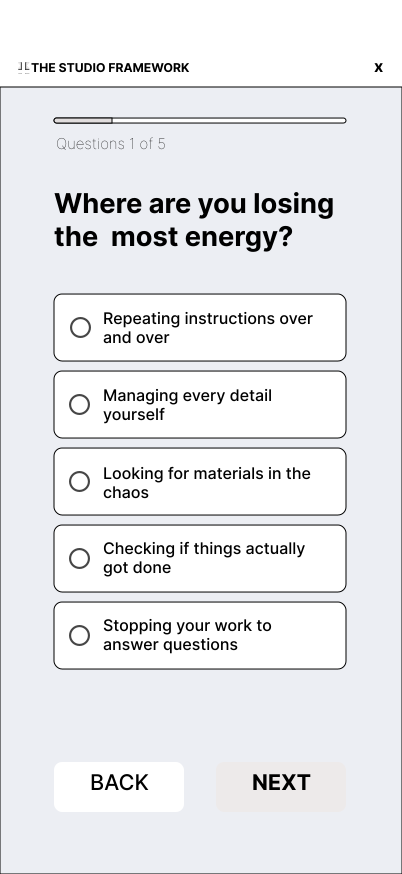
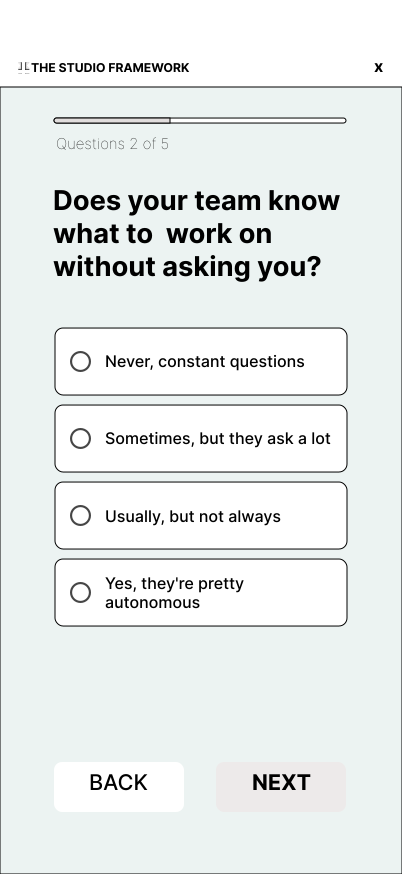
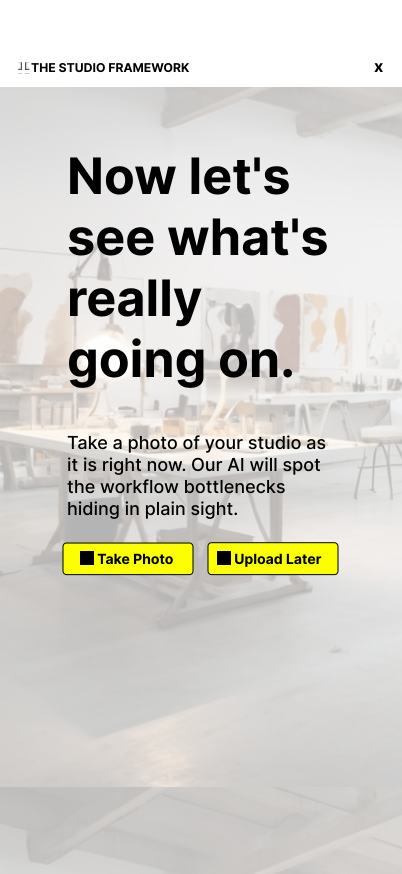
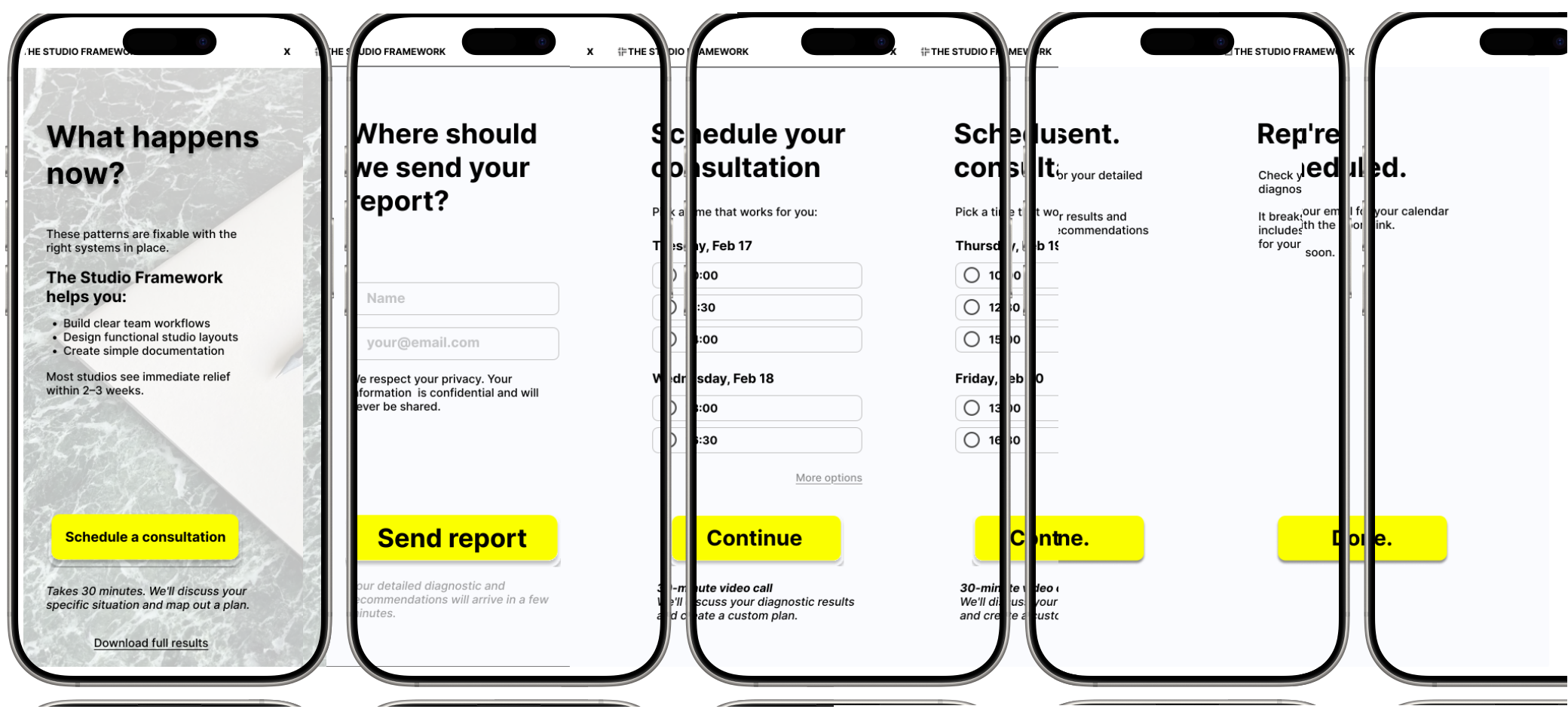
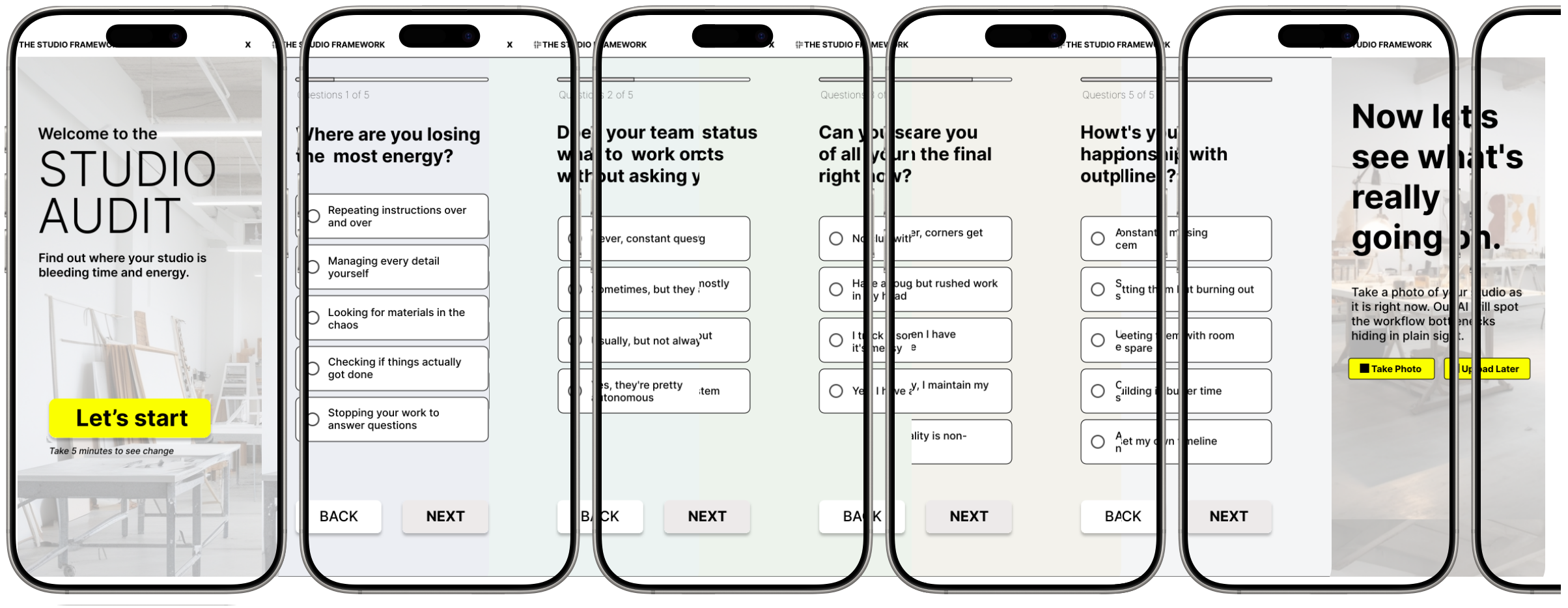
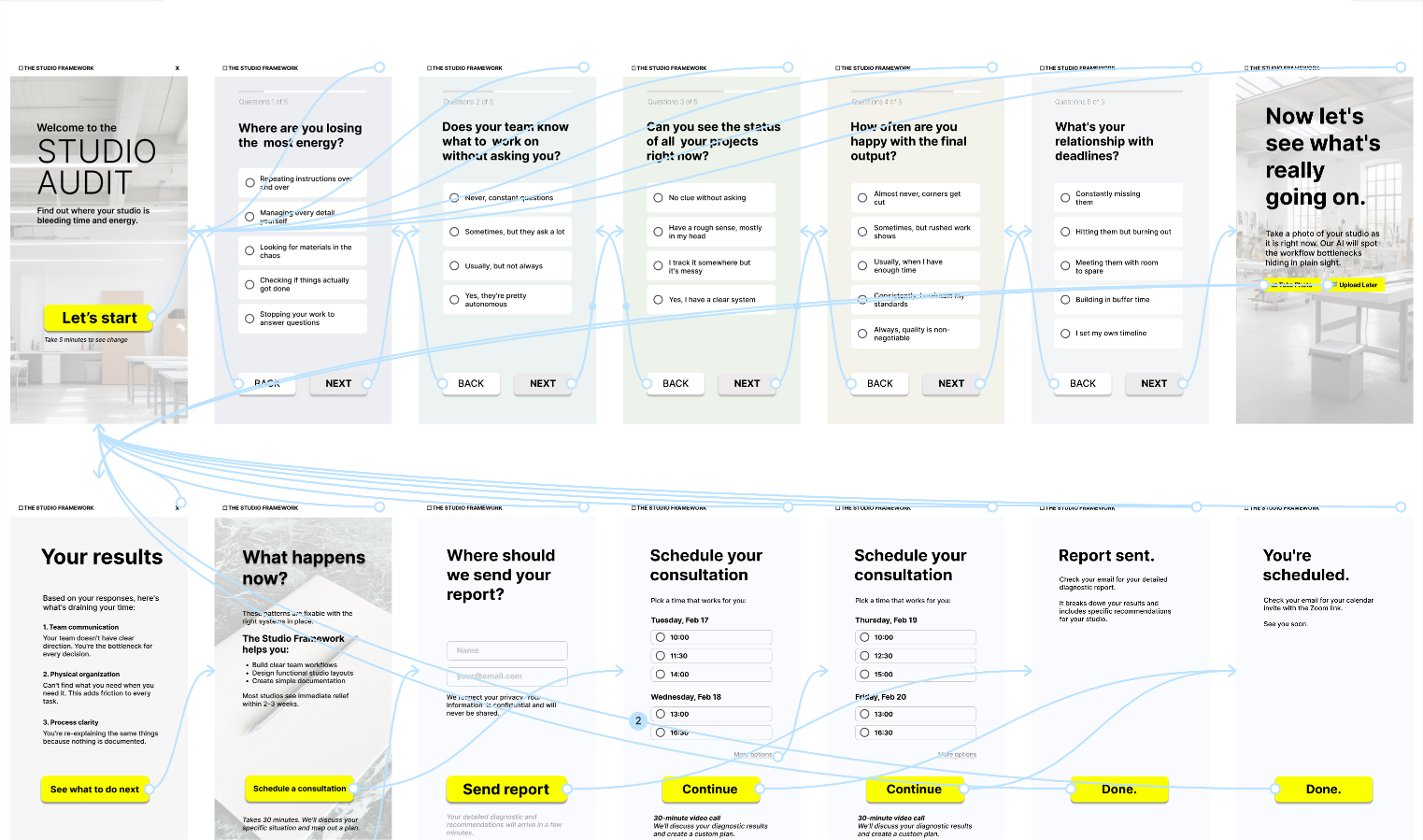
Five questions, one photo, two ways forward.

The flow is linear by design. One screen at a time, one decision at a time. The entire experience is built around one principle: make it so easy to continue that stopping feels like the strange choice.

The visual system came directly from The Studio Framework website. Pastel gray tones, generous white space, a neutral palette. Artists are visually opinionated — a tool with too much personality risks feeling like it belongs to someone else’s sensibility. The yellow button is the single point of contrast. It carries all the conversion weight precisely because nothing else competes with it.


Five questions, one photo, two ways forward.

The flow is linear by design. One screen at a time, one decision at a time. The entire experience is built around one principle: make it so easy to continue that stopping feels like the strange choice.

The visual system came directly from The Studio Framework website. Pastel gray tones, generous white space, a neutral palette. Artists are visually opinionated — a tool with too much personality risks feeling like it belongs to someone else’s sensibility. The yellow button is the single point of contrast. It carries all the conversion weight precisely because nothing else competes with it.


CSSA03b
CSSA03b
SA02

Energy drain

SA03

Team autonomy

SA07

Photo upload

SA02

Energy drain

SA03

Team autonomy

SA07

Photo upload

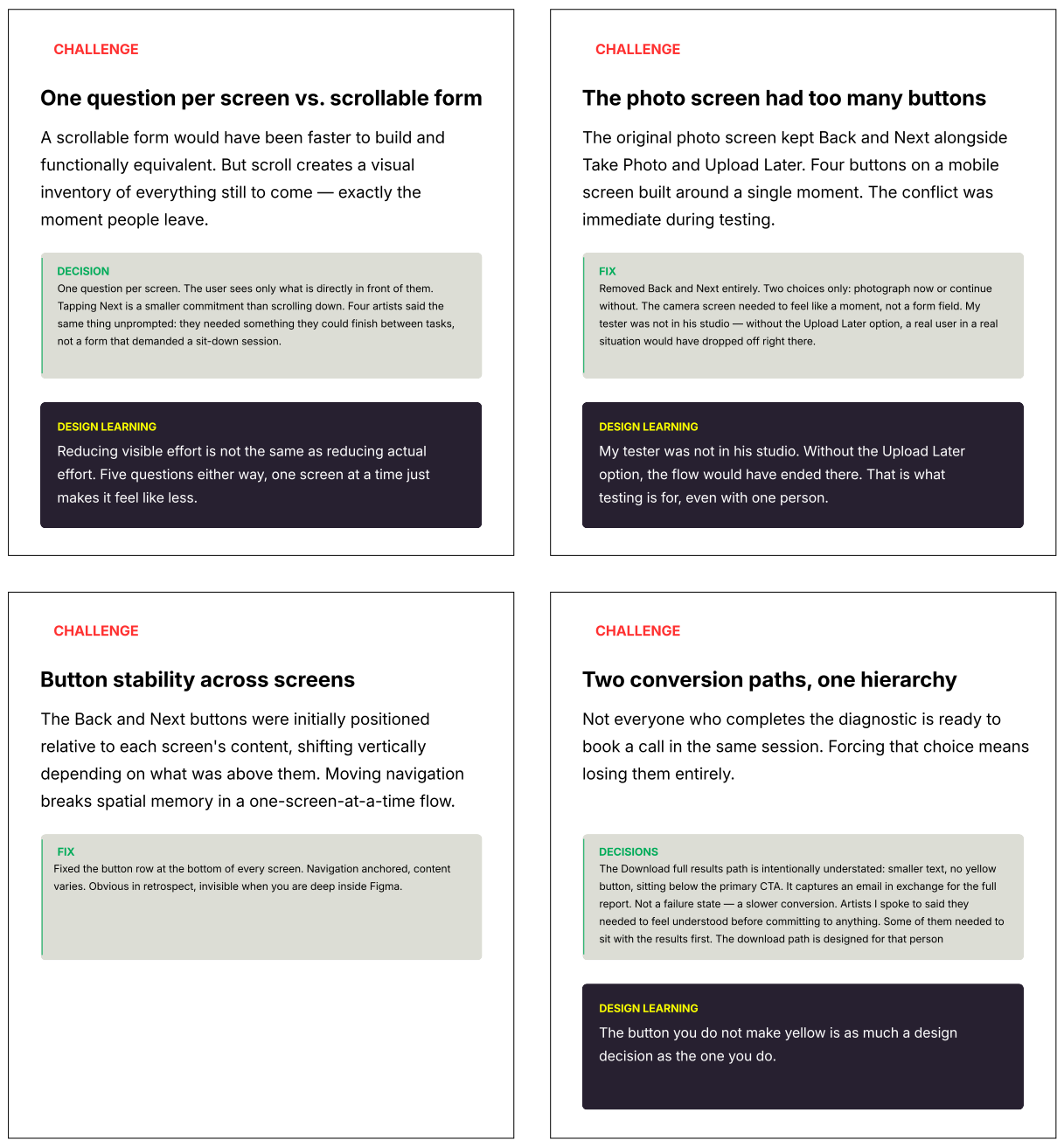
Where it got complicated.


Where it got complicated.

CSSA04g
CSSA04g
CSSA05

Visual hierarchy as conversion strategy — one button gets the yellow, one stays quiet.

CSSA05

Visual hierarchy as conversion strategy — one button gets the yellow, one stays quiet.

What it is designed to deliver.

<5

Minutes to complete. Designed to fit within the attention span of a working artist between tasks.

0

Cold conversations. Every consultation starts with the client already knowing what their three biggest problems are.


2X

Projected conversion rate vs. a standard contact form, based on diagnostic tool benchmarks. The audit does the qualifying work upfront.


Email capture on both paths. Book a call or download the report, either outcome continues the relationship.

Conversion projections are based on industry benchmarks for interactive diagnostic tools. This is a design prototype; production metrics pending implementation.

What it is designed to deliver.

<5

Minutes to complete. Designed to fit within the attention span of a working artist between tasks.

0

Cold conversations. Every consultation starts with the client already knowing what their three biggest problems are.


2X

Projected conversion rate vs. a standard contact form, based on diagnostic tool benchmarks. The audit does the qualifying work upfront.


Email capture on both paths. Book a call or download the report, either outcome continues the relationship.

Conversion projections are based on industry benchmarks for interactive diagnostic tools. This is a design prototype; production metrics pending implementation.


When the tool already understands your problem before you say a word, booking a call stops feeling like a risk.

When the tool already understands your problem before you say a word, booking a call stops feeling like a risk.

What comes next.


What comes next.

Build the error states.

Question validation and photo retry logic are the most important things missing. A user who uploads an unusable photo currently has no recovery path. First thing to fix in the production build.

Wire the booking system for real.

The scheduler in the prototype is static. Connecting it to an actual calendar and automating the report delivery email turns this from a design artifact into a working business tool.

Build the error states.

Question validation and photo retry logic are the most important things missing. A user who uploads an unusable photo currently has no recovery path. First thing to fix in the production build.

Wire the booking system for real.

The scheduler in the prototype is static. Connecting it to an actual calendar and automating the report delivery email turns this from a design artifact into a working business tool.

Test with more than one person.

One session was enough to catch the photo screen problem. It was not enough to validate the question set, the results framing, or whether the CTA hierarchy reads the way it was designed to.

The photo deserves its own screen.

The five questions are scaffolding. What makes this different from a contact form is the AI analysis of the studio image. In the next version, the photo result should be its own diagnostic layer — not bundled with the questionnaire output.

Test with more than one person.

One session was enough to catch the photo screen problem. It was not enough to validate the question set, the results framing, or whether the CTA hierarchy reads the way it was designed to.

The photo deserves its own screen.

The five questions are scaffolding. What makes this different from a contact form is the AI analysis of the studio image. In the next version, the photo result should be its own diagnostic layer — not bundled with the questionnaire output.