Product Designer + Builder
MAKING PRODUCTS CLEAR WITHOUT MAKING THEM GENERIC.
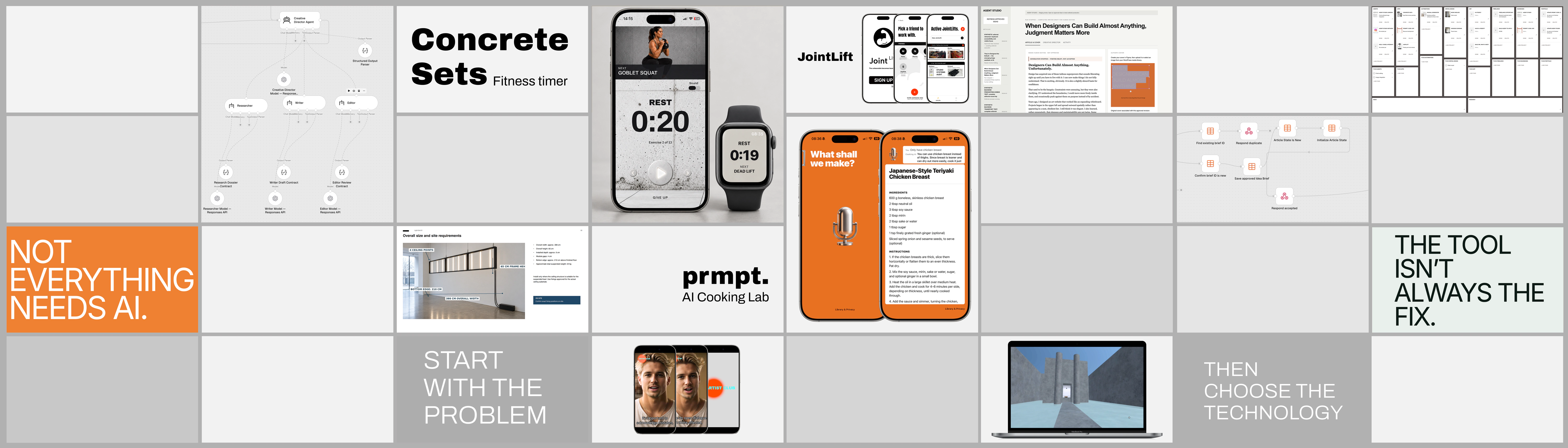
I work with teams that have a promising idea, a difficult workflow or a product that isn’t quite working.
I figure out where the real problem is, test possible directions and turn the useful ones into working products.
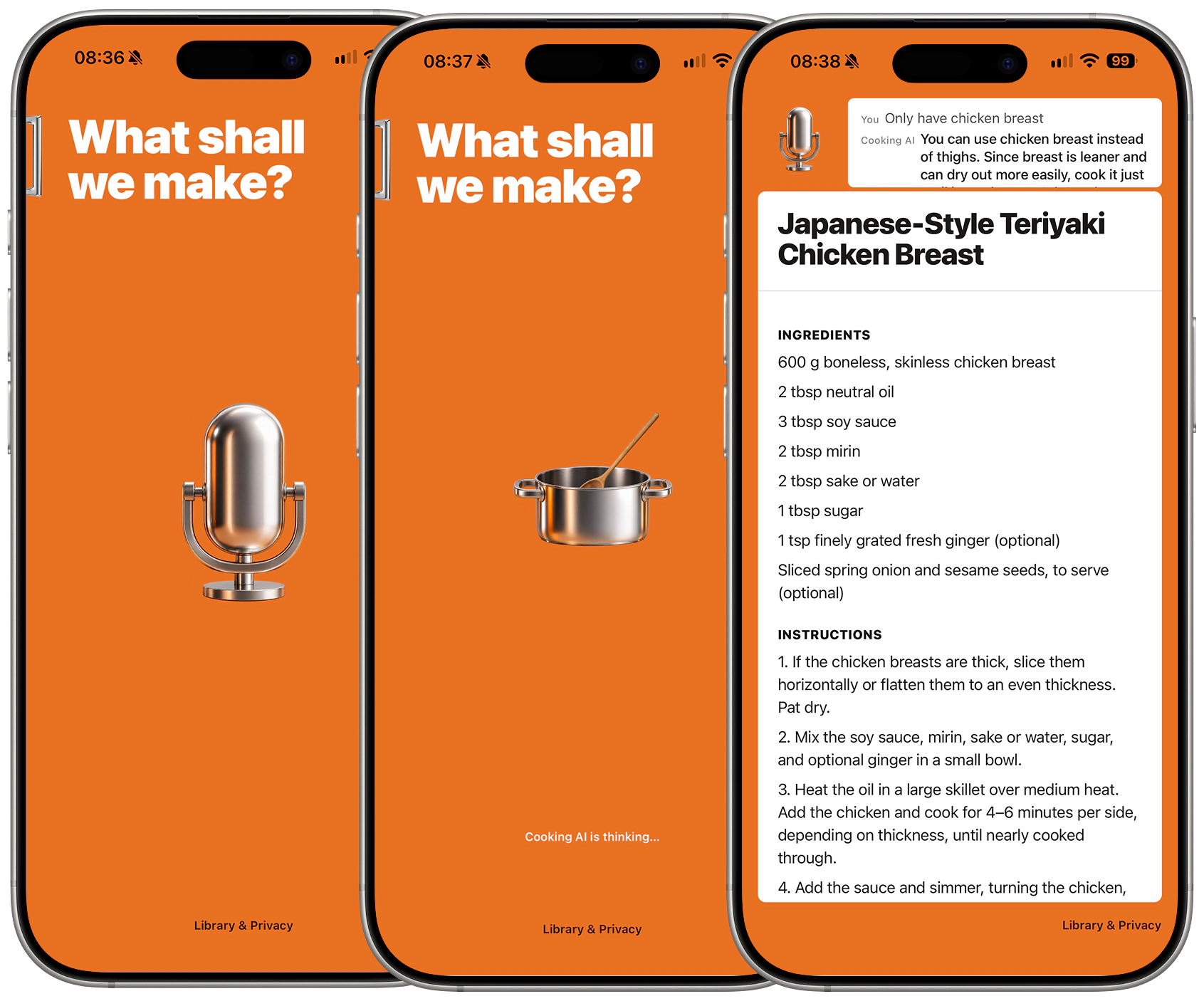
Problem
I loved using AI for cooking, but after a day of working with prompts, threads and project folders, I wanted a break from interfaces. In the kitchen, I just wanted to talk, cook and find my recipes without searching for them.
Judgment
I designed conversation as the interface. No menus, no complicated prompts. Just say what you want to make, refine it as you go, and save recipes with a gesture. The interface should almost disappear.
Tradeoff
Removing conventional navigation meant making every interaction intuitive. I left out recipe photography and unnecessary features, but kept multiple recipe cards so users could build an entire meal through conversation.
Evidence
A working native iPhone app supporting recipe generation, conversational refinement, multiple recipe cards and local saving. Version 1.0 submitted for App Store review.
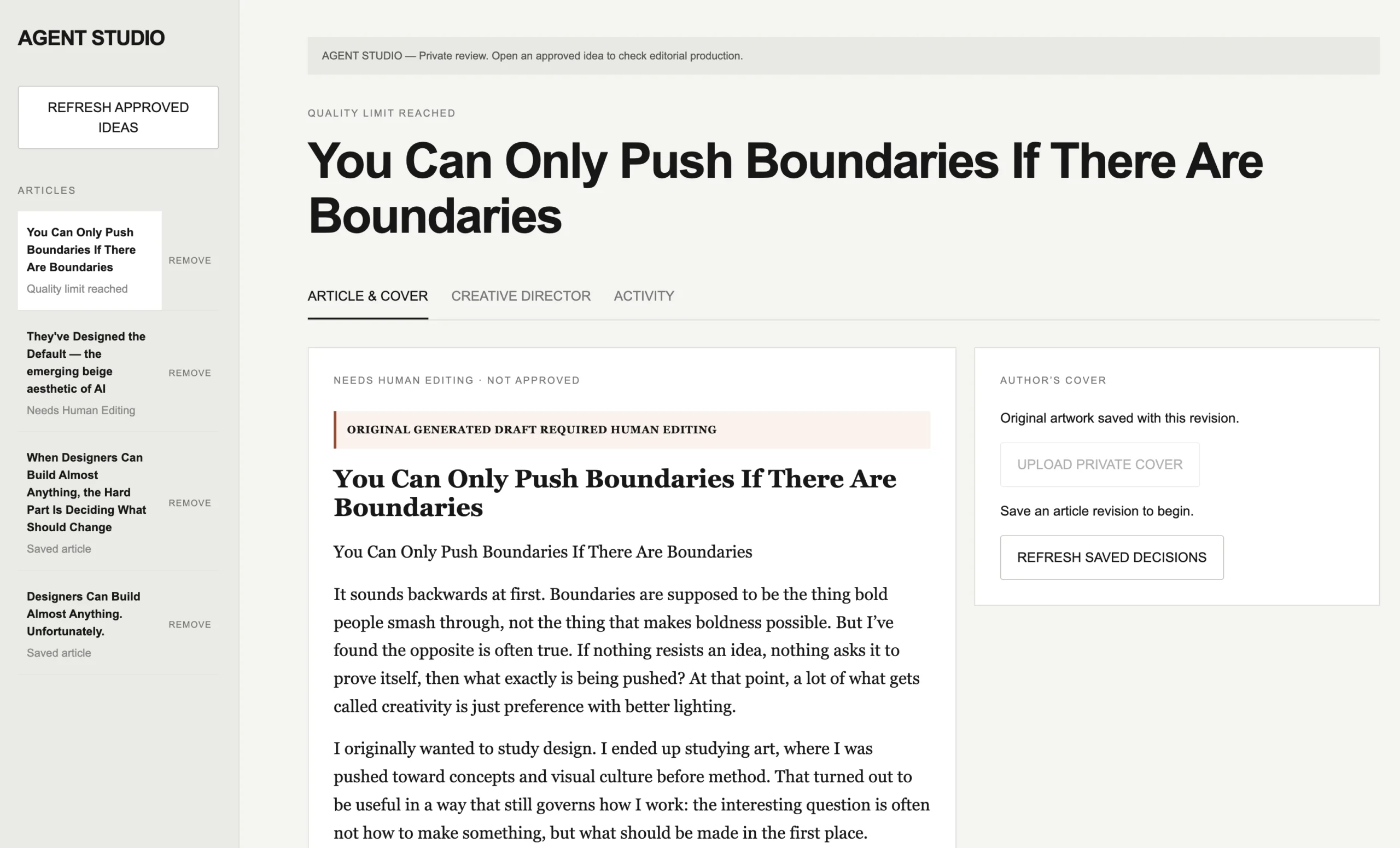
Problem
Producing a coherent article across research, writing and editing involves multiple kinds of work. Without clear responsibilities and review points, AI output can become generic or inconsistent.
Judgment
I separated the process into distinct roles: Idea Partner, Researcher, Creative Director, Writer and Editor, with human decisions between stages.
Tradeoff
More automation is not always better. Editorial direction, idea approval and final judgment remain under human control, even where agents can generate the next draft.
Evidence
A working multi agent editorial workflow used to develop and produce articles. The system is still being extended.
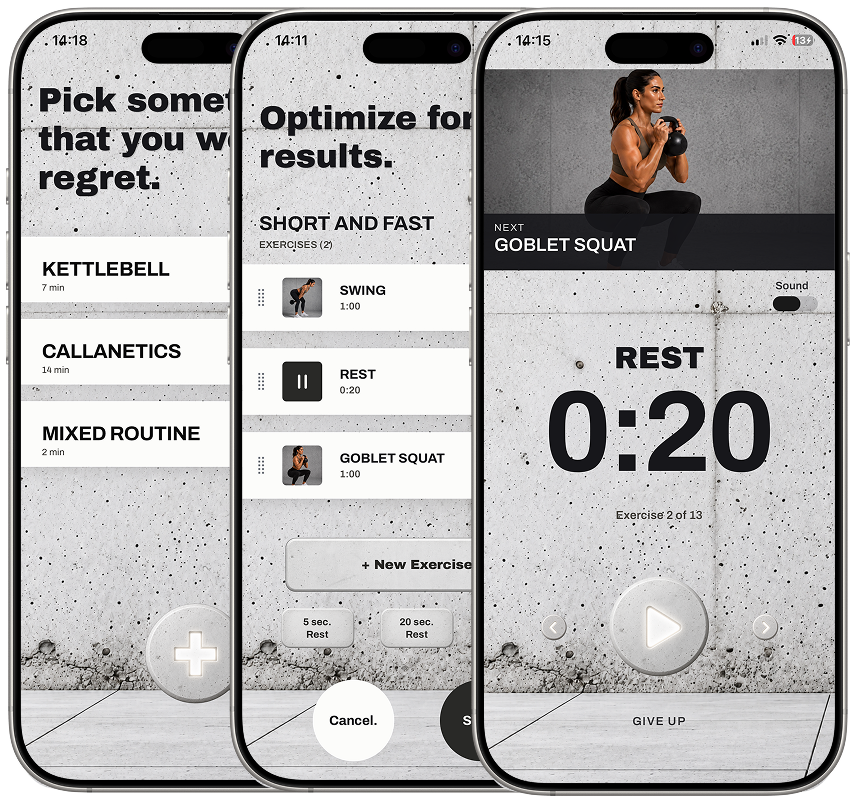
Problem
Workout timer apps are often generic, overloaded or built around fixed routines.
Judgment
I treated it as a training tool rather than a fitness platform, with a strong visual identity and very little product clutter.
Tradeoff
V1 deliberately excludes accounts, network dependency and HealthKit. The priority was speed, offline use and a focused workout flow.
Evidence
A working iPhone and Apple Watch product taken through TestFlight, App Store preparation and submission.
Problem
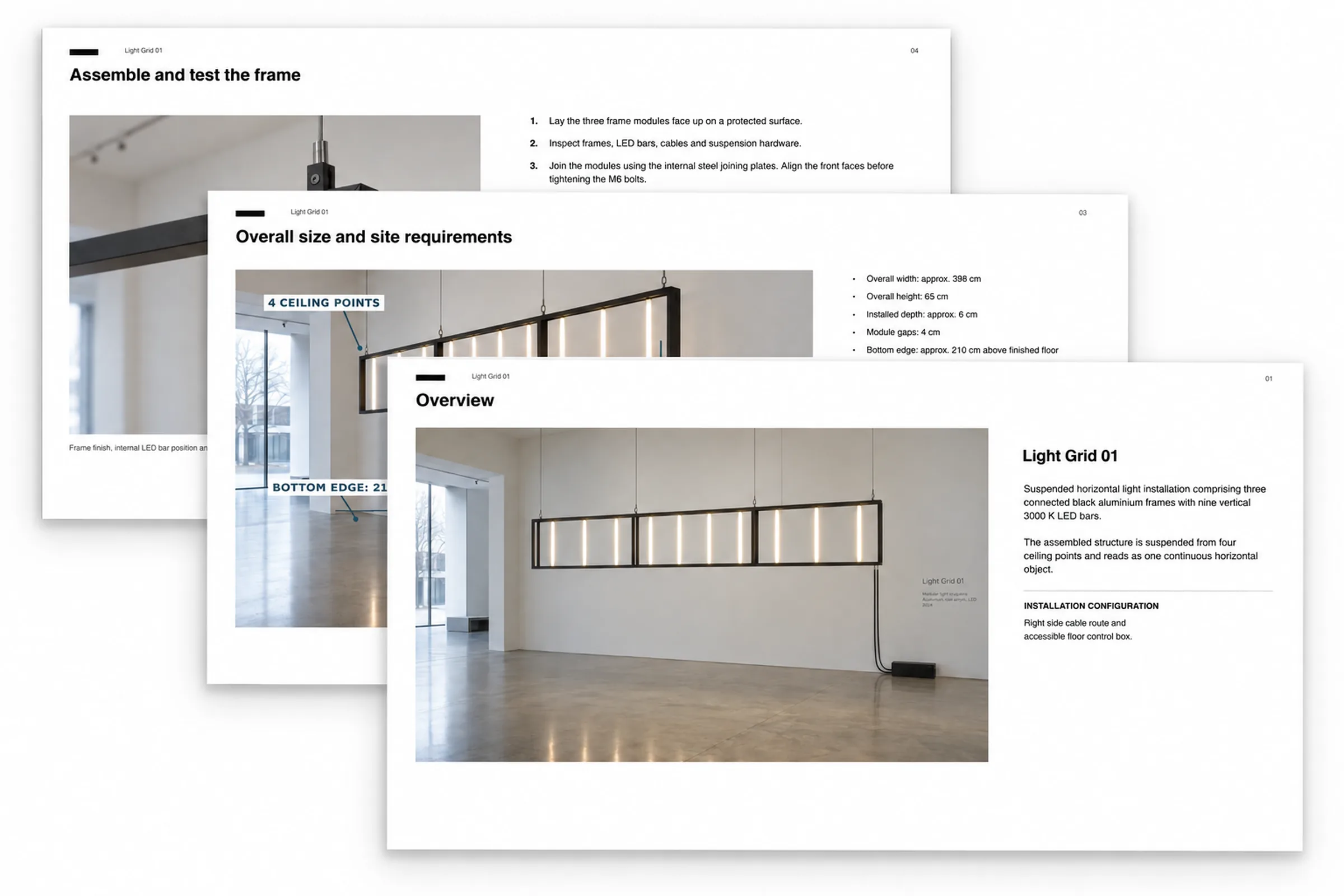
Installation manuals started with scattered notes, dimensions, technical information and images. Every artwork was different, but the final document still had to be accurate.
Judgment
I treated missing information as a product state rather than something AI should quietly fill in. Technical uncertainty stayed visible and returned to a human.
Tradeoff
V1 automated the inherited process with Notion, n8n, Drive and Slides. It worked, but became brittle. V2 replaced most of that orchestration with a conversational workflow.
Evidence
Target: 2–3 days → 1–2 hours. V2 analyses project material, asks targeted questions and produces a reviewable final PDF.
Problem
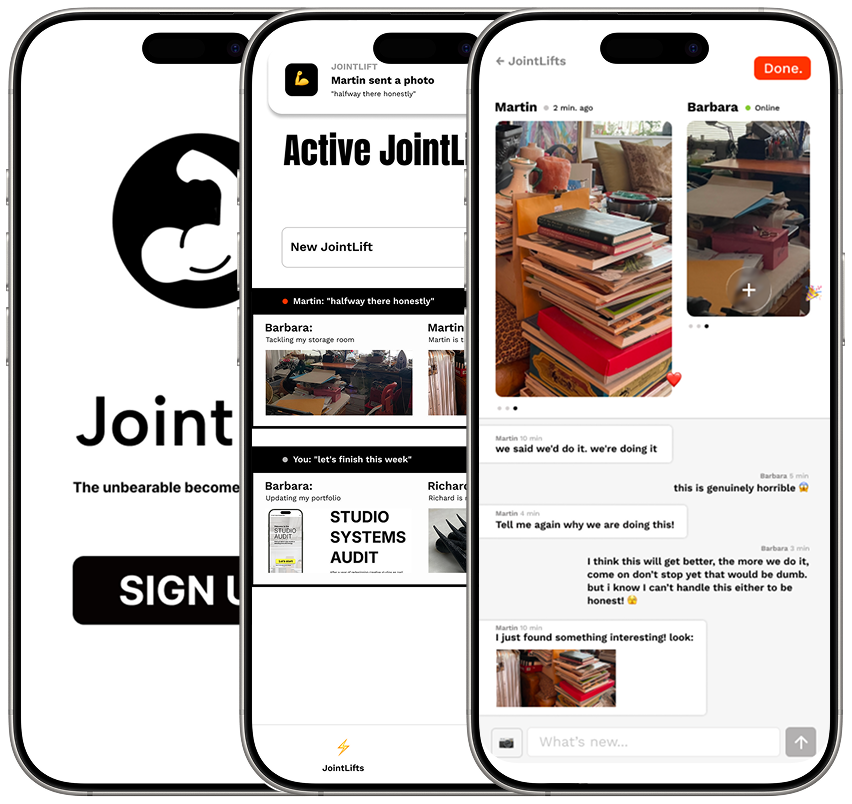
Two people can share the same goal and still lose momentum when ownership, updates and next steps become fragmented.
Judgment
I designed the product around a strict two person model rather than another general project management system.
Tradeoff
Each person owns their own task and only shares what the other person needs to continue. Less coordination, less visibility, more momentum.
Evidence
A working iOS MVP approved for external TestFlight testing with accounts, invitations, progress updates and shared completion.
Problem
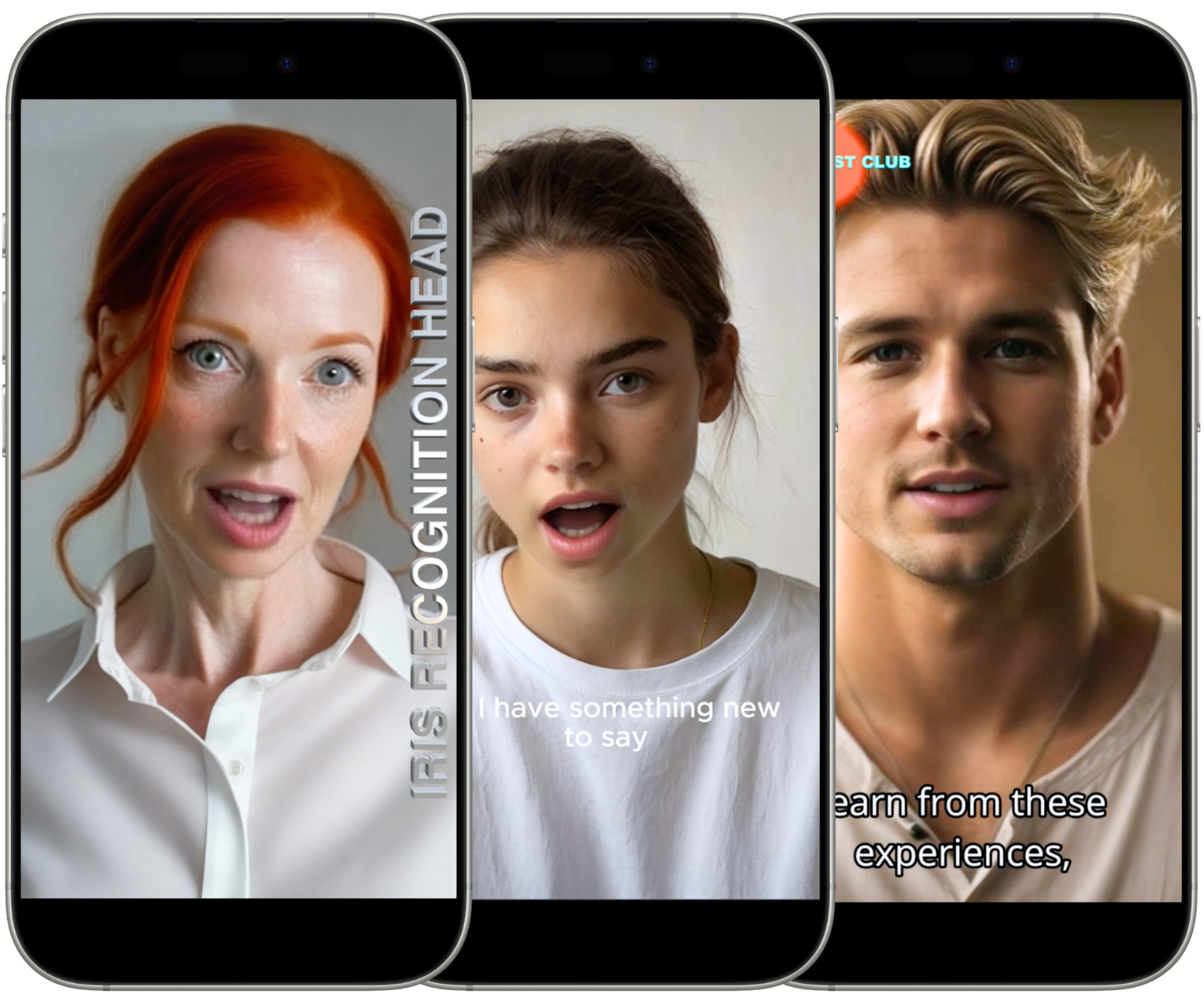
A campaign needed video content without a crew or production budget while early AI video tools were still unreliable.
AI opportunity
No single model could produce the result. The opportunity was to design a workflow around several specialised tools.
Human / AI
AI handled generation at different stages. Human judgment remained responsible for direction, selection, continuity and the final edit.
Evidence
The resulting four tool pipeline reduced production time by 70 percent and increased campaign engagement by 30 percent.
Problem
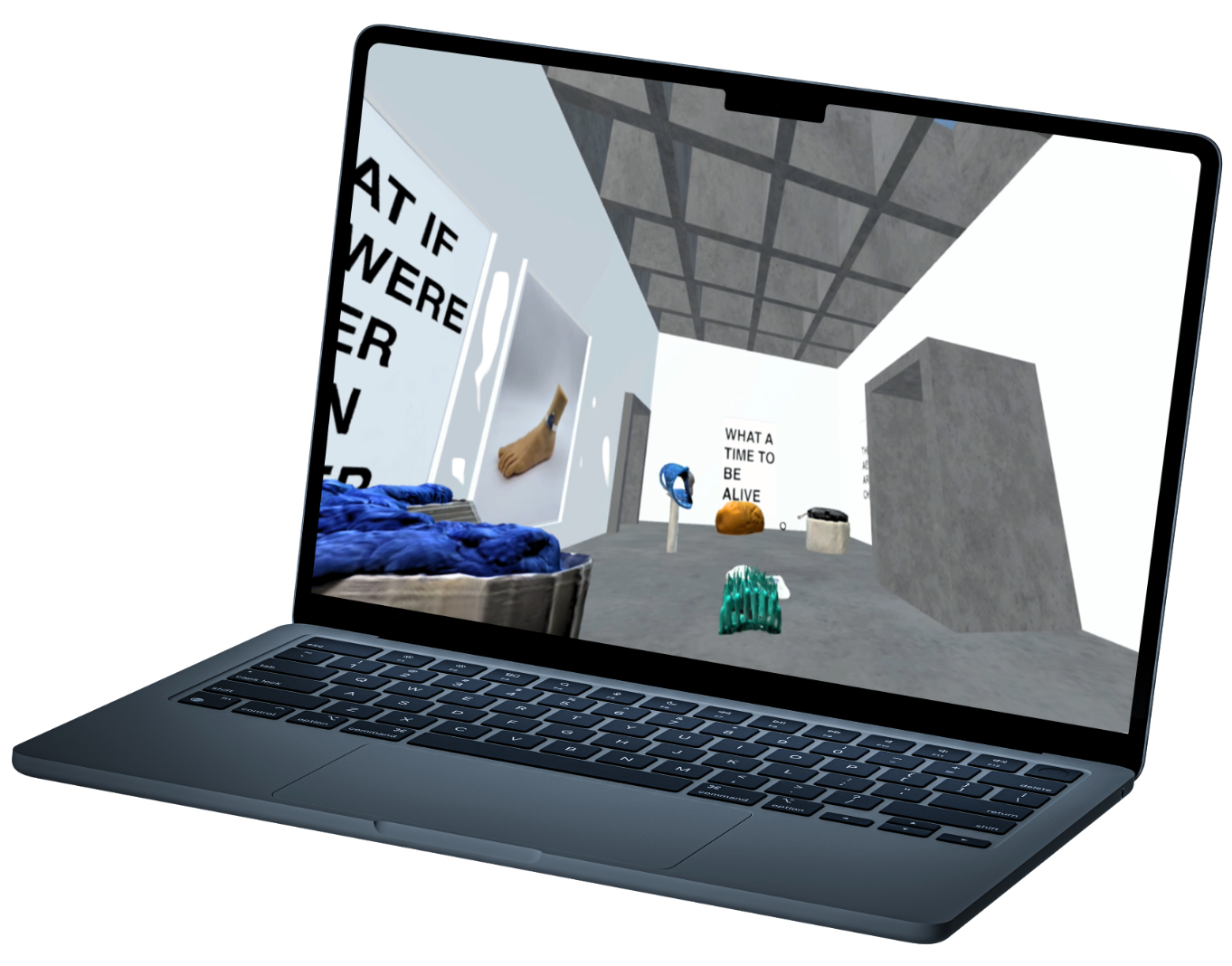
A Canada Council funded project required a virtual museum for a sculpture series, but the platform did not exist.
Judgment
I treated the virtual environment as part of the work itself rather than as a neutral container for displaying objects.
Tradeoff
When the developer left halfway through, I chose to learn Blender and take over the spatial build rather than reduce the concept.
Evidence
A functioning and accessible XR museum platform launched publicly as part of the funded project.

In an age of AI, when almost anything can be designed and built rapidly, it’s no longer just about how we build. It’s about what we choose to build.
I work across AI experience design and design engineering, taking ideas beyond prototypes into working V1 products. Products that hide their complexity behind simplicity, without losing their character.
I’m at my best when something is broken, unclear or chaotic. I find the structure inside it, test directions in code, and ship work that feels obvious in hindsight.
QUESTION WHAT’S
WORTH BUILDING
I challenge the premise before designing the solution. What actually needs to exist? What can disappear? What problem are we really solving?
BUILD DIRECTIONS
IN CODE
I test at the speed of thinking by building, not just designing screens. Weak ideas get killed before they become expensive. The result is working code, not another prototype to throw away.
SHIP TO V1
Once the direction is clear, I refine until the complexity disappears and the product feels simple. Done when people can actually use it, not when every detail is perfect.
ABOUT
In an age of AI, when almost anything can be designed and built rapidly, it’s no longer just about how we build. It’s about what we choose to build.
I work across AI experience design and design engineering, taking ideas beyond prototypes into working V1 products. Products that hide their complexity behind simplicity, without losing their character.
I’m at my best when something is broken, unclear or chaotic. I find the structure inside it, test directions in code, and ship work that feels obvious in hindsight.
HOW I WORK
QUESTION WHAT’S
WORTH BUILDING
I challenge the premise before designing the solution. What actually needs to exist? What can disappear? What problem are we really solving?
BUILD DIRECTIONS
IN CODE
I test at the speed of thinking by building, not just designing screens. Weak ideas get killed before they become expensive. The result is working code, not another prototype to throw away.
SHIP TO V1
Once the direction is clear, I refine until the complexity disappears and the product feels simple. Done when people can actually use it, not when every detail is perfect.
LET’S MAKE
SOMETHING WORK.
I take on independent projects and I’m open to joining the right product team.
What interests me is working on products and workflows where the problem still needs figuring out, the direction needs shaping, and the solution needs building.
If that sounds like what you’re working on, get in touch.
GET IN TOUCH